
11 Unique Souvenirs to Buy in Ecuador (+ What to Leave at Home)
Heading to Ecuador, and want to be in the own about some of the unique things you can bring home? After 2 weeks travelling around Ecuador, we were amazed at a lot of the really unique souvenirs. There are so many delicious foods produced in Ecuador, colourful textiles, handmade trinkets, and original, artisan art.
A big part of what struck me in Ecuador was how many of the souvenirs were homemade. It’s nice to see the creativity, uniqueness and even imperfection of handmade art produced by locals. Some common symbols you’ll see are alpacas, guinea pigs, indigenous gods and devils, mountains, and fruit. Below you’ll find some of the most Ecuadorian, unique souvenirs to the country to bring home, make great gifts and keepsakes of your trip.

Unique Things to Buy in Ecuador
1. Chocolate
I’ve tried chocolate from many other Latin American countries, and Ecuador’s chocolate took my breath away. It has the best texture and and they make chocolate bars most creative flavours that I’ve never seen in chocolate – mint, orange, grapefruit, passionfruit, coffee, chilli pepper, and many others.
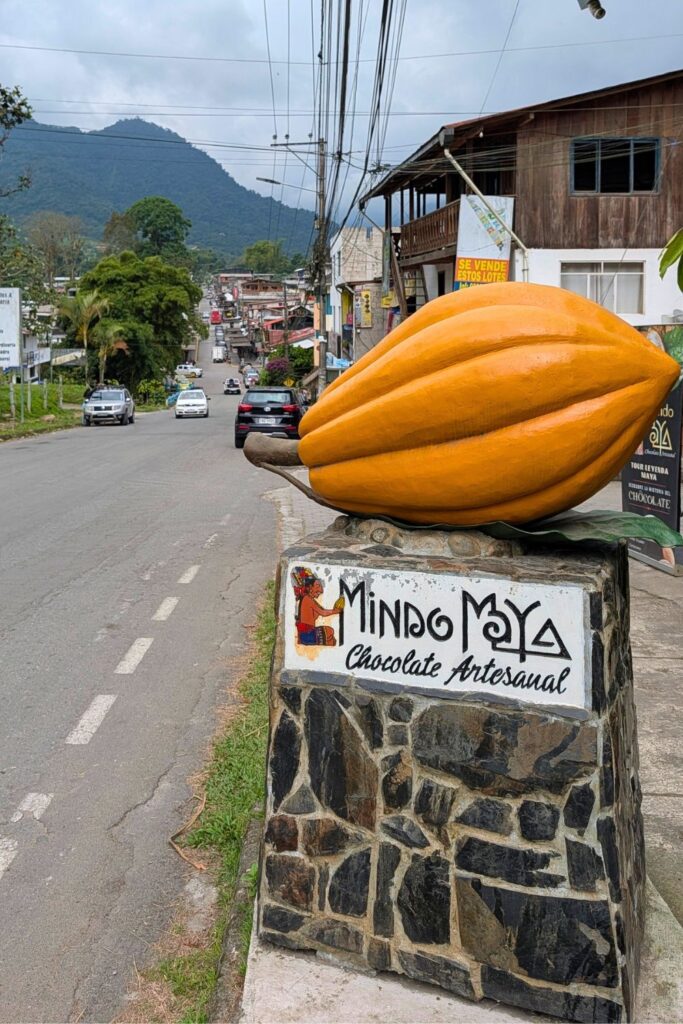
There a few different chocolate brands to look for in Ecuador- Pacari is by far, the most common Ecuadorian chocolate brand and the easiest to find. We bought a few of their bars, but I found out later from an Ecuadorian friend that Pacari is more ‘international’ now and the quality isn’t quite what it was when it was still a small business. If you don’t go to any other chocolatiers, then Pacari is still Ecuadorian and absolutely a good option. We tried their orange bars, grapefruit, mint and other flavours.
But that being said, I highly recommend looking for smaller Ecuadorian chocolate companies if you can, like Yumbo’s and Mindo Maya chocolate. After trying both of them, we agree that Yumbo’s is our # 1 favourite chocolate from Ecuador, with Mindo Maya being a close second. Not that Pacari chocolate isn’t good, but you can taste the difference with these other chocolates. You can do tours if you visit Mindo or Quito. The chocolate bars a little bit pricey ($6-7 each) but are very good quality chocolate and delicious.
2. An Alpaca blanket
You’ll see many alpaca blankets in Ecuador that are made with alpaca wool and are extremely soft and breathable. They’re surprisingly lightweight too for a blanket of their size. They are usually colourful, with Andean-style designs. I was quoted $28 for a large blanket that probably would have fit across a queen bed, but it was likely open to bargaining for less than that.
If you buy anything with alpaca wool, double-check any labels to see what kind of material they’re made of. They could be made of synthetic materials, or a mix of synthetic materials rather than just wool. If its a mix of synthetic materials, then the price should be lower than if it were 100% alpaca wool. Keep in mind though that finding 100% alpaca wool blanket is actually very rare and expensive. The majority of the blankets in souvenir stores are made with a mix of materials rather than just alpaca wool.
3. Ecuadorian Coffee (Including High Altitude Coffee)
Similar to other countries in Latin America, Ecuador makes great coffee. The coffee beans are grown in Ecuador, and some at high altitude, which is called Cafe de Altura (Altitude Coffee). Many Ecuadorian coffee farms are family-owned. You can buy coffee from the supermarket or from a smaller family-owned farm. We also saw many coffee bags sold in cafes, restaurants, and chocolatiers.
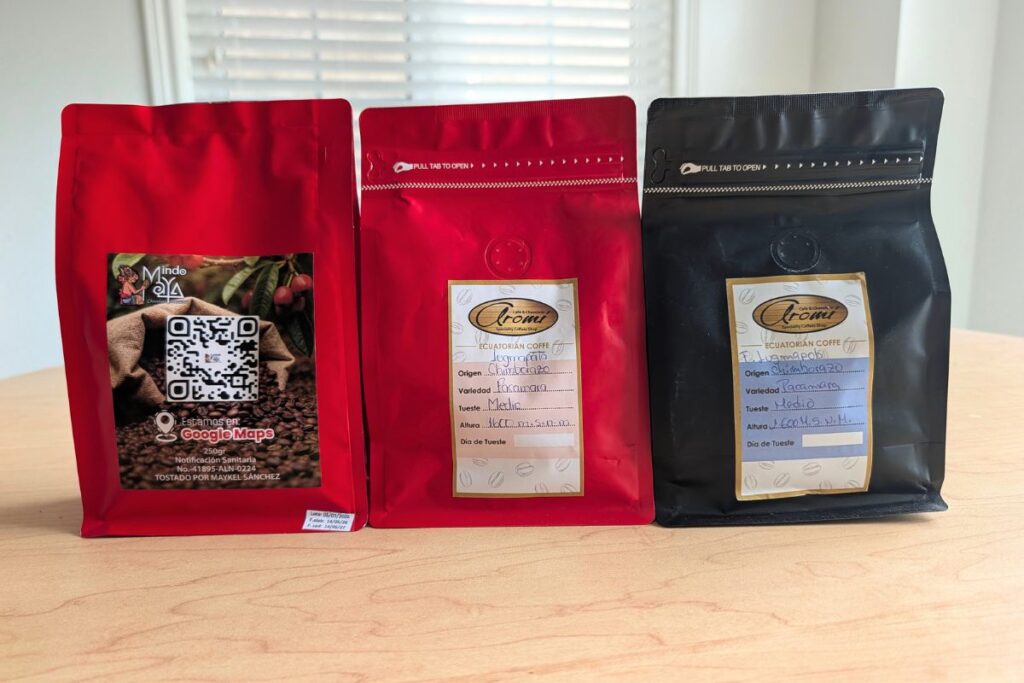
Similar to anywhere else, you can buy the coffee already ground, or you can buy it in full beans. We bought ground coffee from an Ecuadorian supermarket to drink during our trip, and then we bought full-beans to bring home (many of them grown in high altitude), they smell amazing.
High altitude coffee can have floral and fruity notes. Honestly its not my favourite coffee in terms of taste, but I’m glad that we tried it. Each bag can taste a little bit different, with different farms, different coffee bean varieties and altitude levels. We bought two different bags, and they didn’t taste identical!
4. Andean Alpaca Dolls
We saw many of these cute, fluffy Andean Alpaca dolls; often at markets and vendor tables. They’re incredibly soft and make a nice gift or toy for a child. They are handmade, and some, such as my photo below, have Ecuador colours in braids. We sometimes saw guinea pigs (called coy in Ecuador) instead of alpacas.
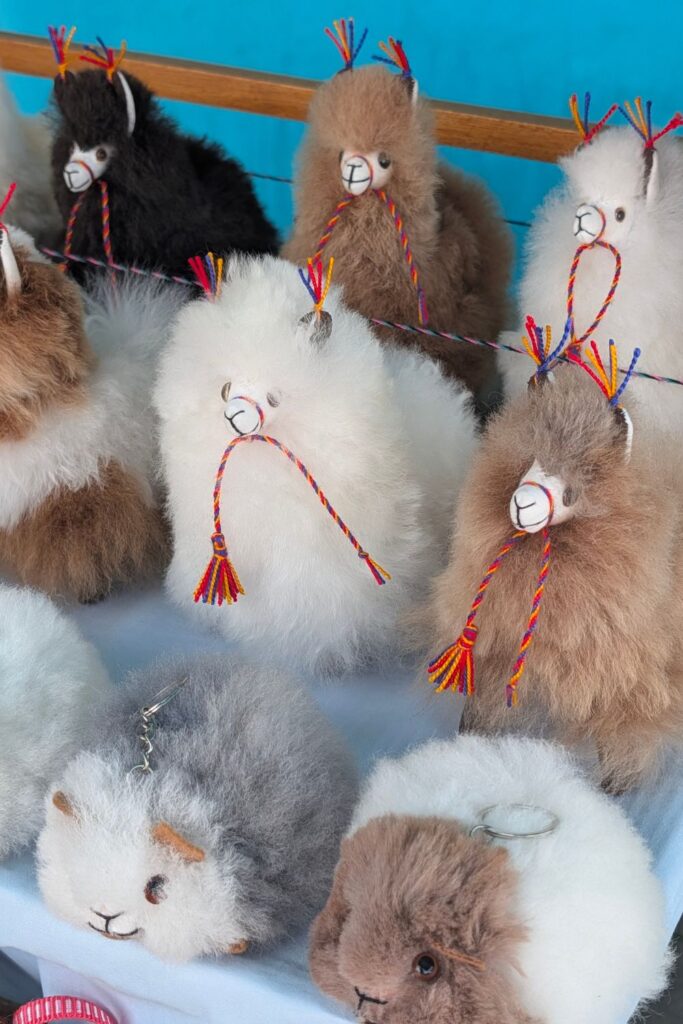
Since we were travelling through Ecuador with kids, we were begged for these cuties quite often. We didn’t cave, unfortunately, because we have so many toys and stuffies at home. But I do have to admit that they are cute; and if you’re looking for something smaller, many of them were made to be tiny keychains instead of stuffed animals.
5. Something with the Diablo Huma on it
I saw this bright colourful mask so often at Ecuador, that I had to look up what it was. It’s the Diablo Huma, which is an important figure in the indigenous Kichwa culture of the Andes. Contrary to the name, I found out that Diablo Huma is not a devil, and does not represent evil in any way. He was misunderstood to be evil by European settlers who came to Ecuador, but that is not the original intention.
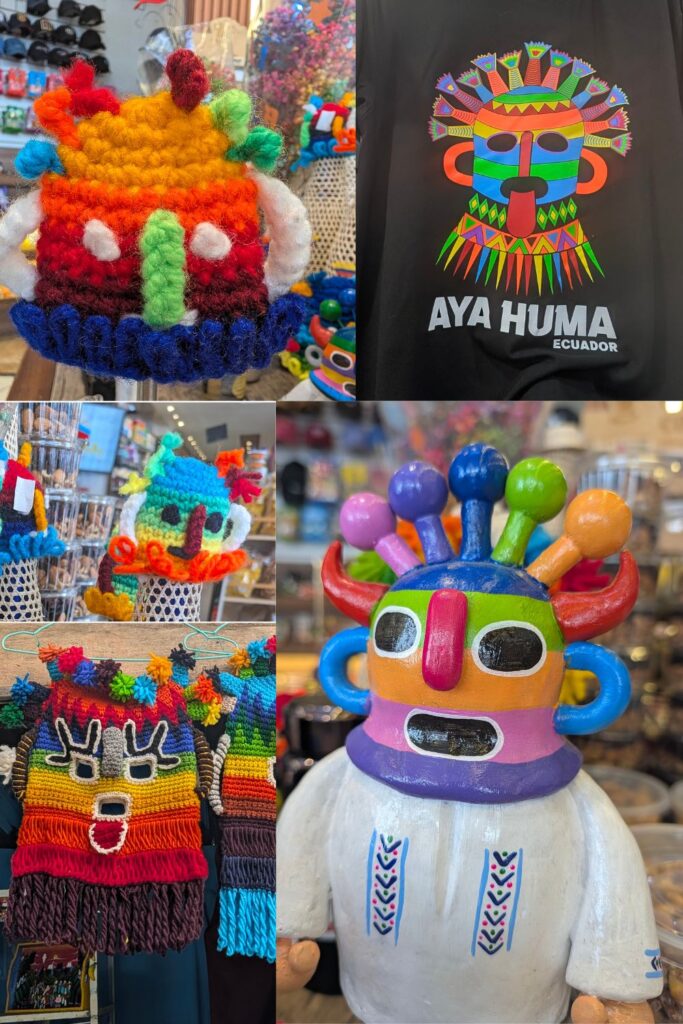
You will see the colourful masked face in so many places. T-shirts, knitted mask to top on wine bottles, magnets, and figurines. Now you’ll recognize it as a spiritual symbol on Ecuador’s indigenous history.
6. Chiffles
I’ve seen snacks similar to Chifles before, but these ones in Ecuador are the best that I’ve ever had. They’re fried bananas, or plantain turned into chips. They’re basically a (somewhat healthy) snack that come in different flavours and seasonings. The best ones would come in clear plastic bags, as these are the most ‘locally’ and small business-made. But I also loved the ones that came in factory-sealed bags too. We bought many bags of chidles in Ecuador, but none of them made it back home with us.
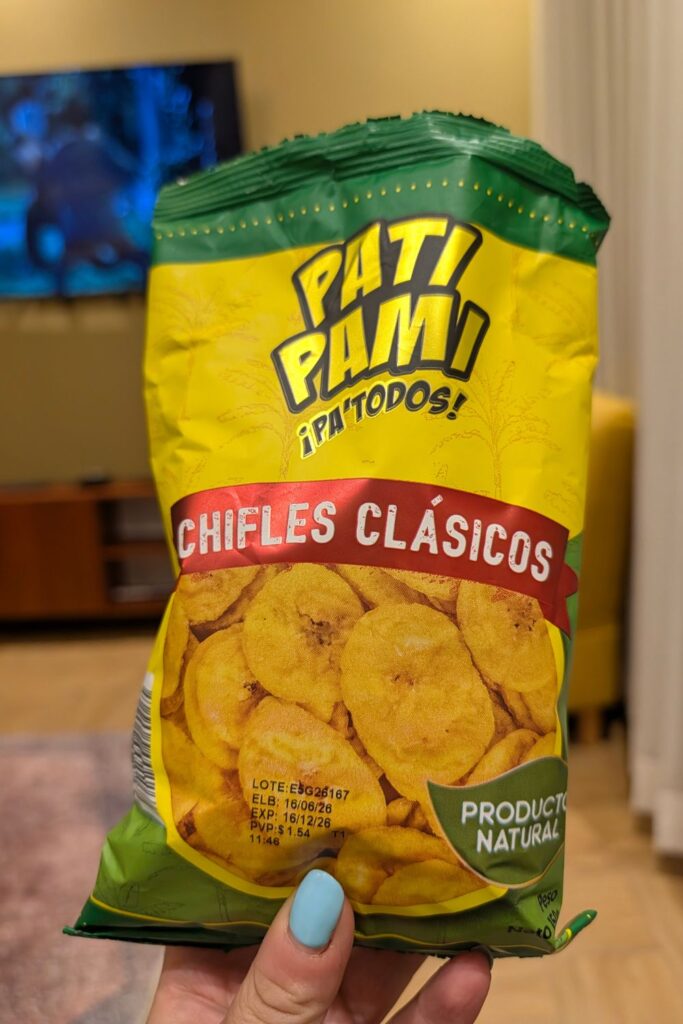
7. Hot chocolate
The hot chocolate in Ecuador is so much better than it tends to be at home in Canada. It’s a lot more chocolatey (real chocolate) and less added sugar. Even my kids liked it better. I bought some instant hot chocolate for them to enjoy in the cold Ecuador mornings, and it was a lot better than a tin of similar product at home. It goes great with toast or cereal in the morning. I’m glad we brought some home to last us through the Canadian winter!
8. Colourful textiles
Similar to Mexico and Costa Rica, you will see a lot of the bright, colourful textiles in Ecuador. Even though they look similar to other South and Central American textiles, the ones in Ecuador are unique to Ecuador, with their own geometric designs and patterns. Theyre often made into ponchos or blankets, which would make a thicker material to keep you warm – perfect for the Andes region, or other cooler climates.

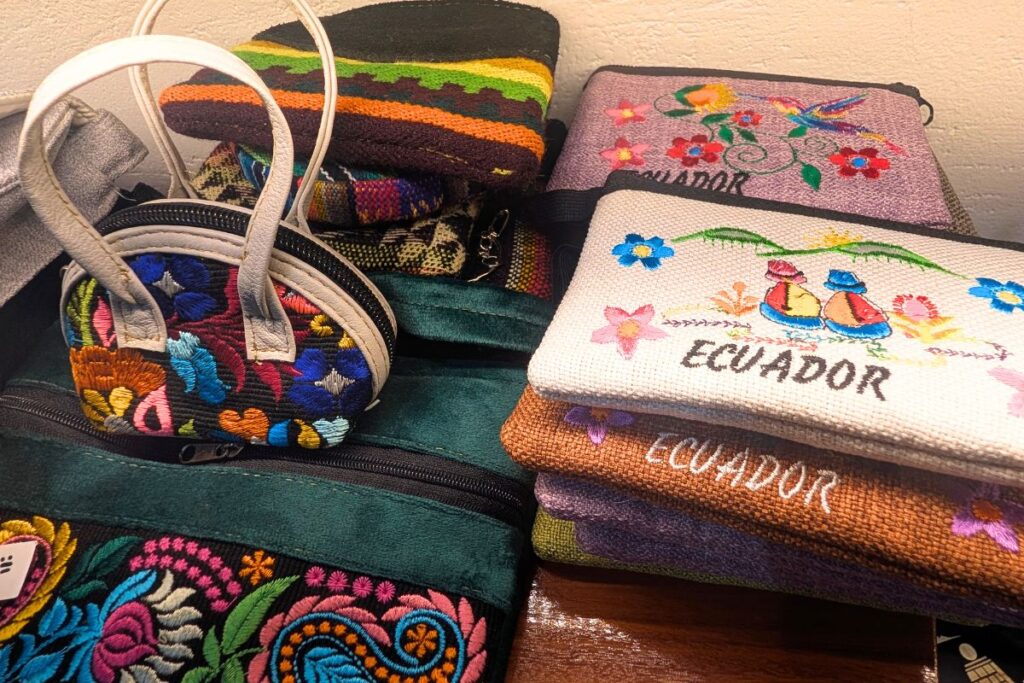
9. Handmade embroidered alpaca wool coin purses
We saw many of these beautifully hand-embroidered coin purses, pouches, and little purses. They’re often embroidered with different colours, and with classic symbols of Ecuador. Often, they’re arisan made by small businesses. Double check when you buy them that they are local made rather than imported.
10. Ecuadorian handmade candy
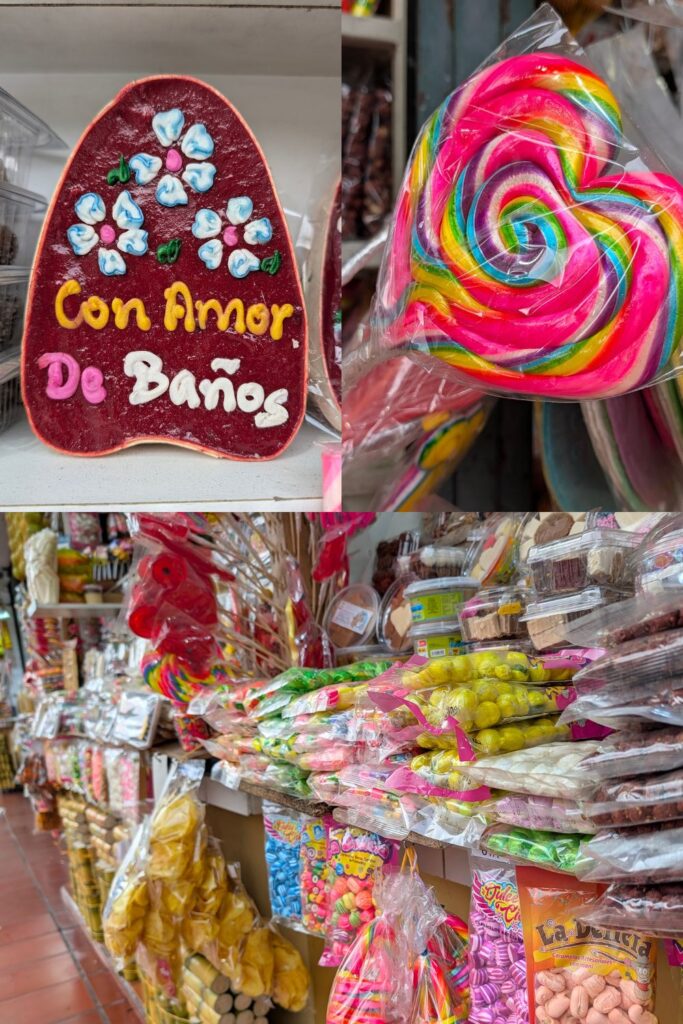
Ecuadorians love their sweets, including baked goods and candies. We saw a lot of stalls and vendors everywhere selling handmade candy, made from sugar cane. In Baños, its very common for people to sample the sugar cane in its pure form before being turned into candy, which is called melcocha. Most of the candy is hard candy, and made into bright coloured lollipops, and bags full of bite-sized treats. With some of them saying “Con amor de Baños” with the place name, it would make an excellent gift or a souvenir from Ecuador.
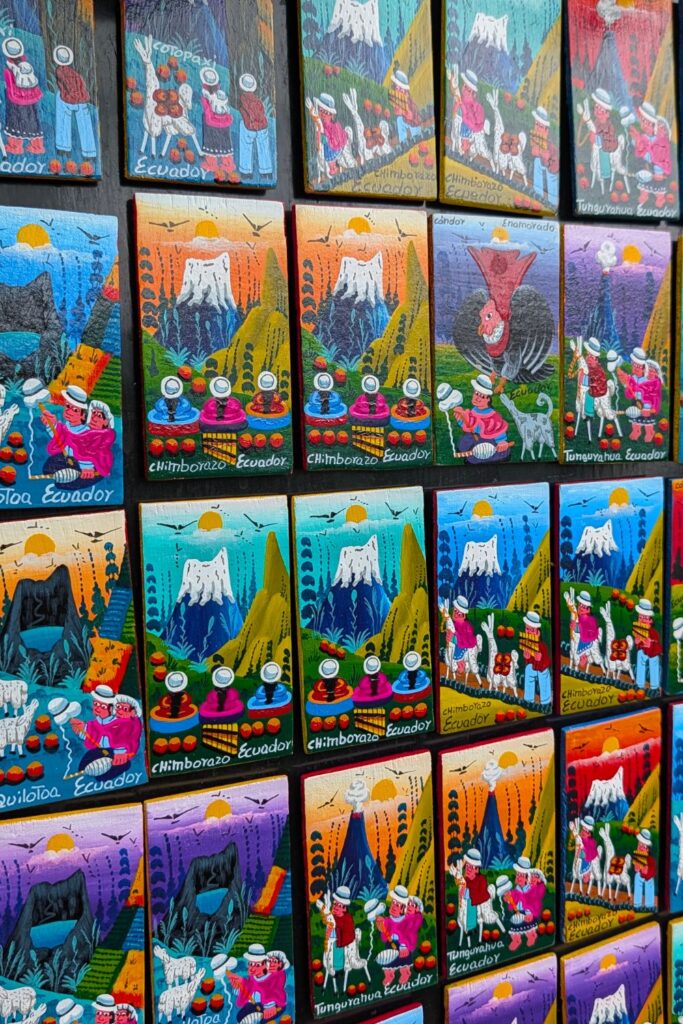
11. Hand-painted magnets
I loved how many of the Ecuadorian souvenirs were handmade, drawn or painted – especially the magnets. They have so much beauty, colour and the personality of Ecuador in them. Magnets in Ecuador will typically cost $3-$4, depending on the vendor, where you’re buying it from and how intricate the design is.
12. (BONUS) Handmade bracelets
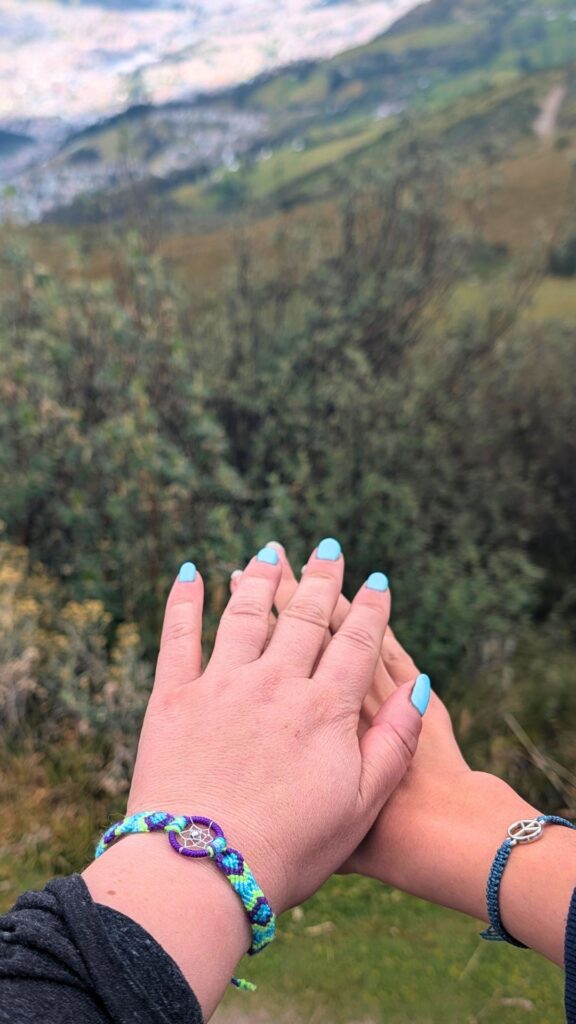
We saw a lot of handmade bracelets when we were in Ecuador. Almost every vendor selling souvenirs seemed to have them. We bought some friendship bracelets from the vendors at the top of the Teleferico in Quito. They are usually very colourful. They make a simple souvenir that isn’t heavy at all to bring back.
What NOT To Bring Home from Ecuador
1. Anything with ‘coca’ in it
I struggled with altitude sickness during our first days in Quito, and some Ecuadorians recommended to me that I try caramela de coca, which we bought from the market. In addition, I saw that you can order te de coca from cafes, or buy it from a supermarket. What I didn’t realize though, is that the coca origin is the same plant that is used to make cocaine. Bringing back any products with the coca plant as the origin is illegal in many countries, including Canada, US, UK and the EU.
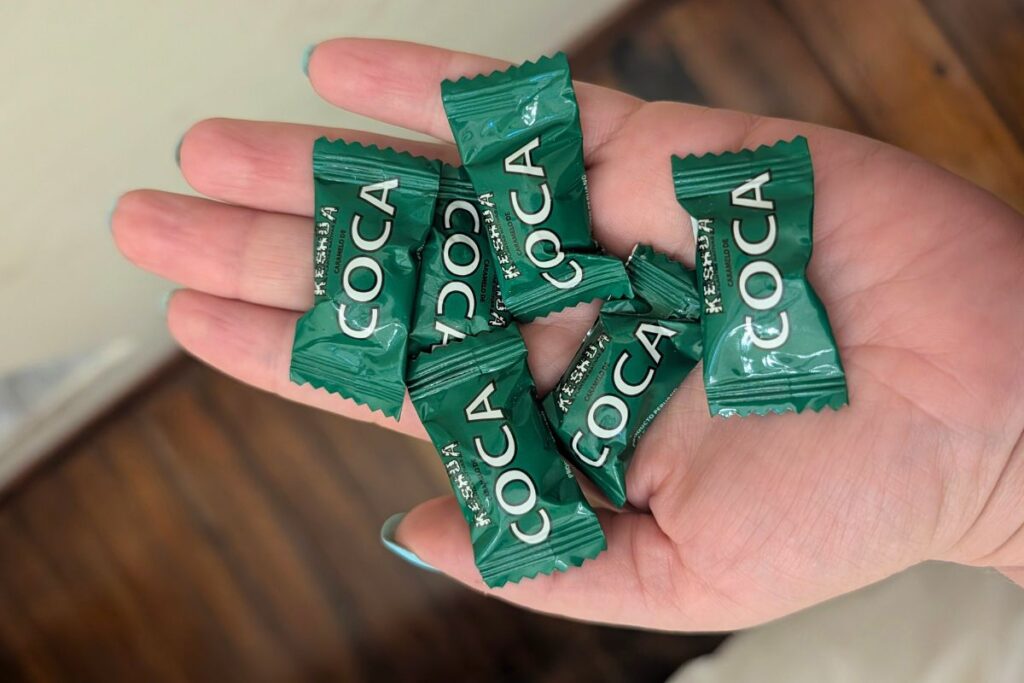
Even though its just candy, or tea, it is treated the same as a narcotic and you can face massive fines or criminal charges for trying to bring them back home. I carried many of these candies around Ecuador, in my pockets, purse and bags and had to be really careful to make sure we’d found and gotten rid of them all before flying back home. So, if you buy the candies or the tea made from coca leaf, just make sure they’re used or that you’ve taken them out of your luggage before heading home!