

Iceland in February: A Guide (2025)

Heading to Iceland in February? You’re in the right place.
February is a great time to visit Iceland. The landscapes are gorgeous, and its not as cold as you think.
There’s also a decent (not guaranteed) chance of seeing the Northern Lights.
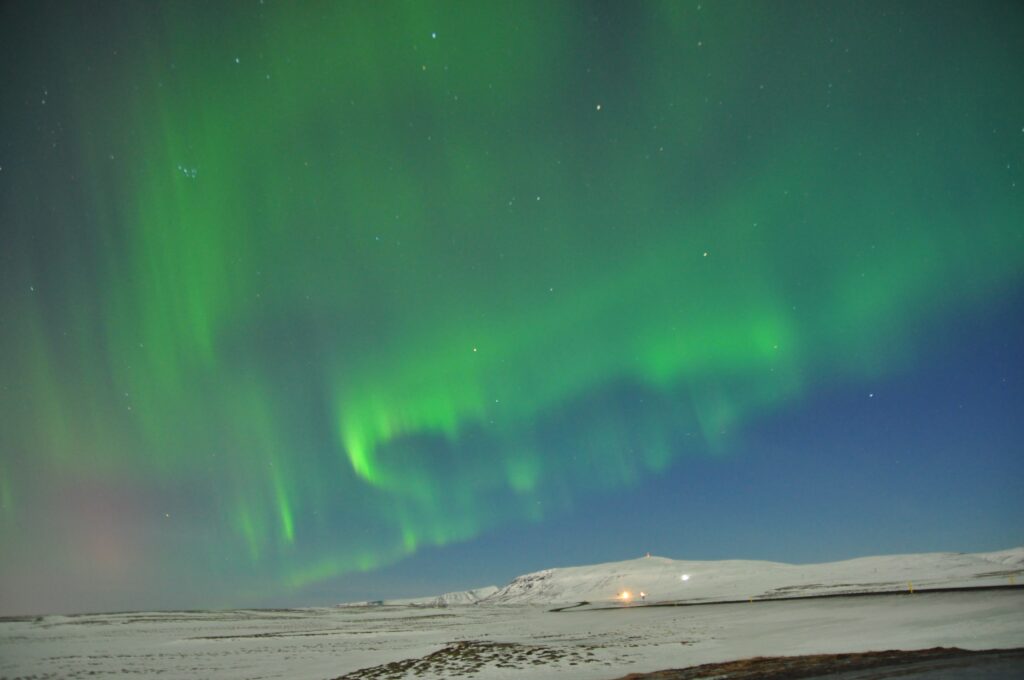
Keep in mind that the weather can be unpredictable at this time of year. Be sure to rent a car with a 4-wheeler, and beware of icy conditions.
While visiting Iceland in February, I was able to:
- Experience the majestic waterfalls
- Visit downtown Reykjavik and other attractions with less crowds
- Saw the Northern Lights
Whether you’re in Iceland with kids, on your own or on a couples getaway, there’s plenty of things to do and ways to enjoy Iceland during the month of February.
So let’s jump in – Iceland in February!
Weather in Iceland in February
I’ll be chilly in February in Iceland, but it may not be as cold as you think it will be. The average high is in February about 3°C (37.4°F) and the low is -2°C (28.4°F).
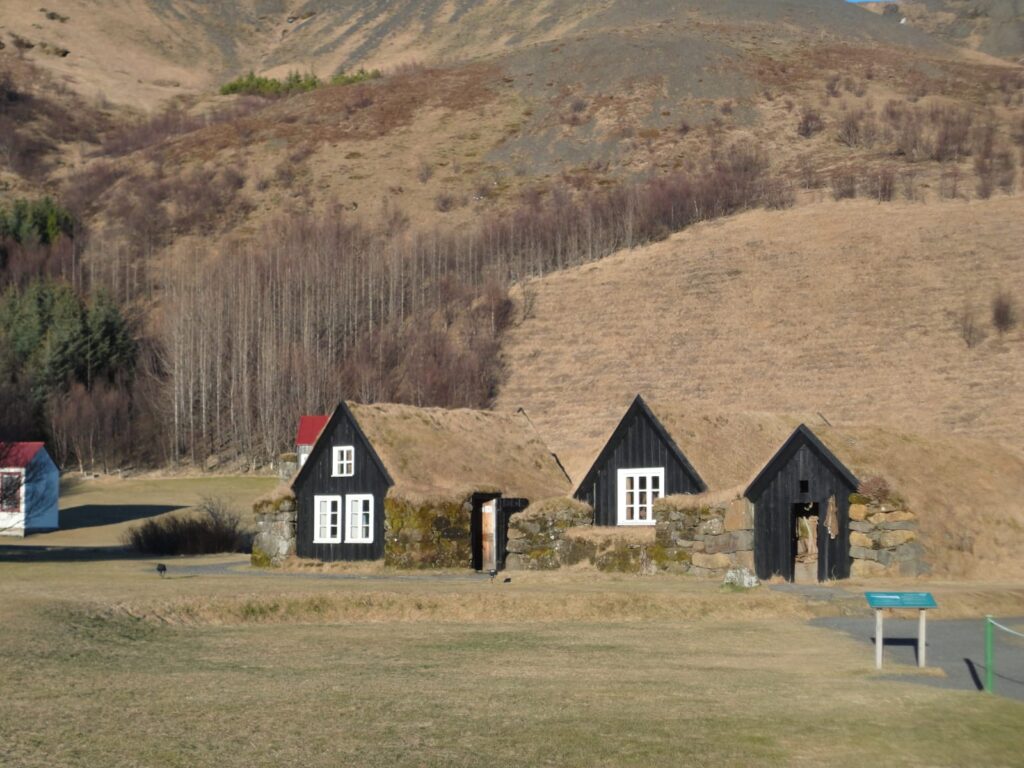
So although its cold, its not usually an extreme cold. Its warmer in Iceland in than it is in other Northern Hemisphere locations, (largely because of the Gulf Stream which decreases the cold air from the ocean.)
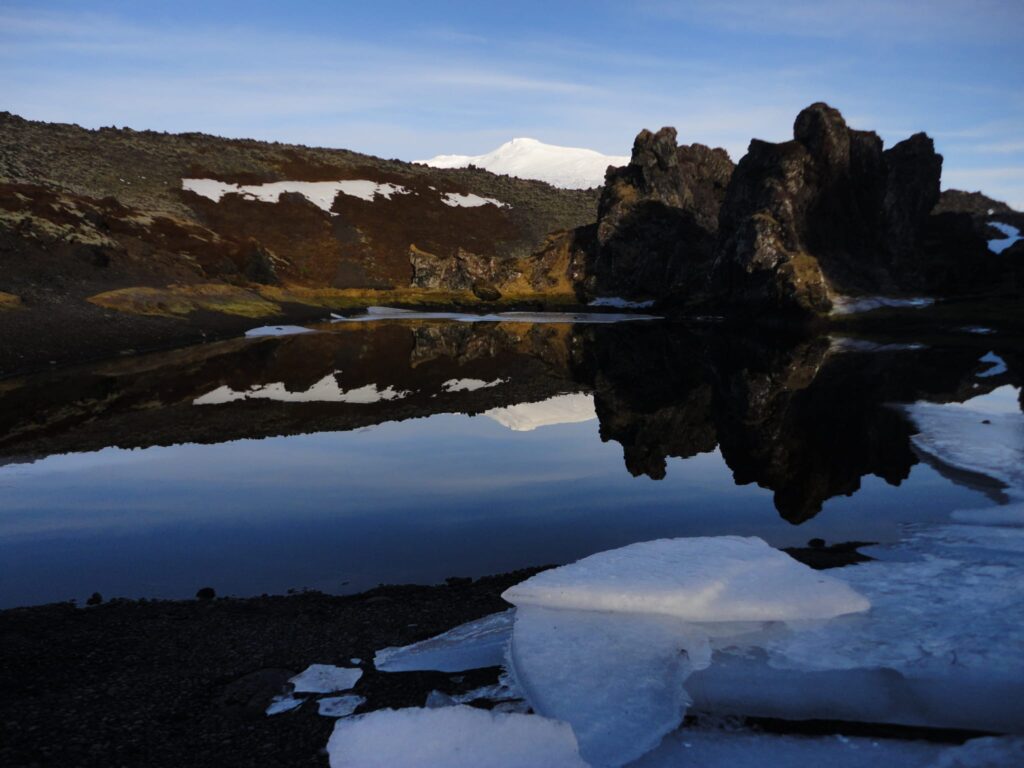
There might be some snow on the ground in Iceland in February, but sometimes there’s no snow at all.
December and January are the highest months for snowfall in Iceland, and February can receive some snow, but usually may only be a thin blanket.
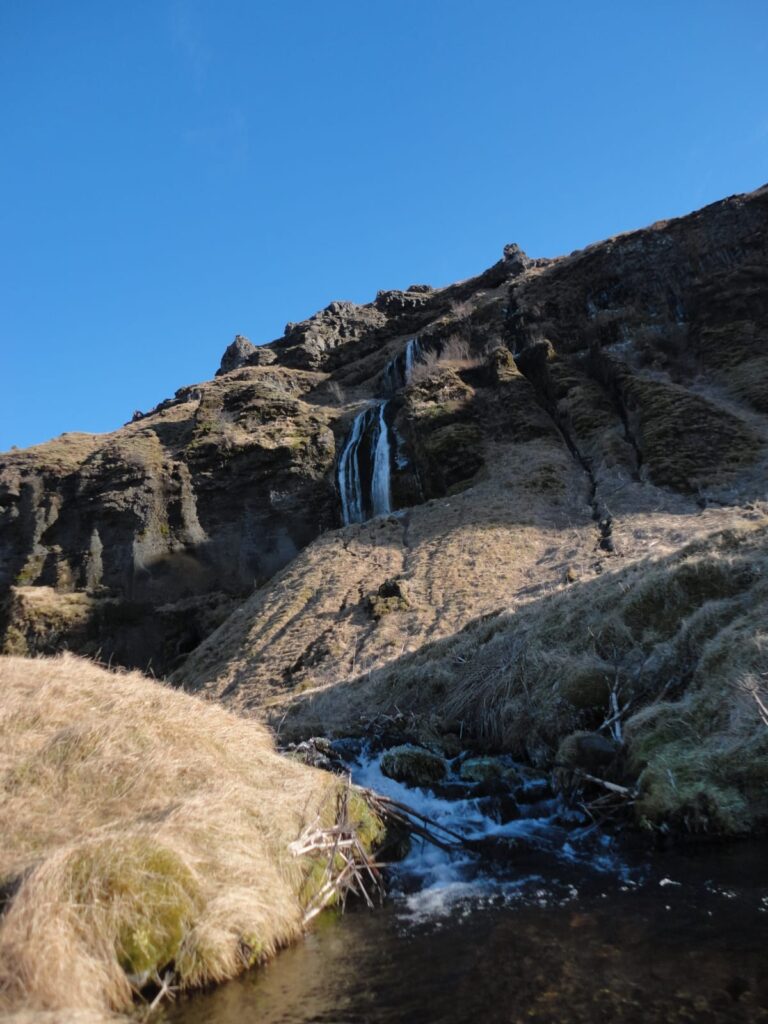
When we were in Iceland in February, there was just a thin layer on the ground, but sometimes there was no snow – like in the photo above.
What you Need to Know about Iceland in February
- The sun in Iceland rises sometime between 8:40 and 10am, and sets sometime between 5:14 and 6:42pm.
- The weather can be unpredictable; sometimes there could be icy conditions, or a snowstorm. Depending on what kinds of activities you’re planning, you should prepare for cold and snowy weather just in case
- If you’re renting a car, then it will already have winter tires, but its a good idea to request studded tires if they’re not already included with your rental. Also, a 4-wheel drive is best for this time of year.
- Seeing the Northern Lights is based on how cloudy it is – February is an optimal time of year to see the Northern Lights, but seeing them is never guaranteed
What to Do in Iceland in February
Here are the best things to do in Iceland during the month of February
1. Try to see the Northern Lights
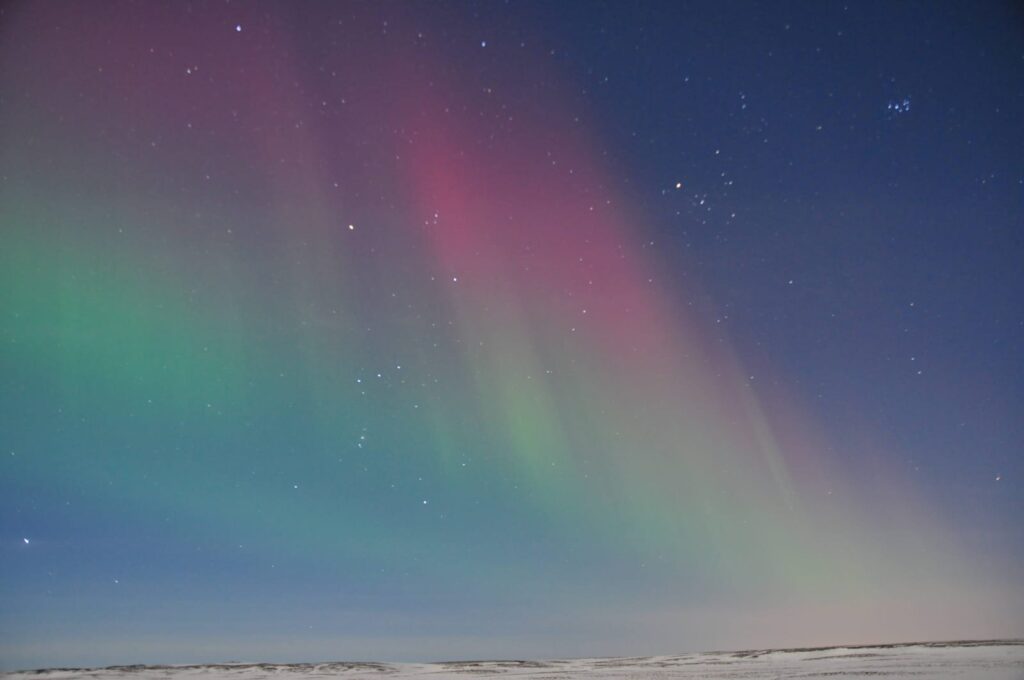
Winter is the best time to catch the Northern Lights in Iceland. October through March is considered optimal, so February is a pretty good time for seeing them.
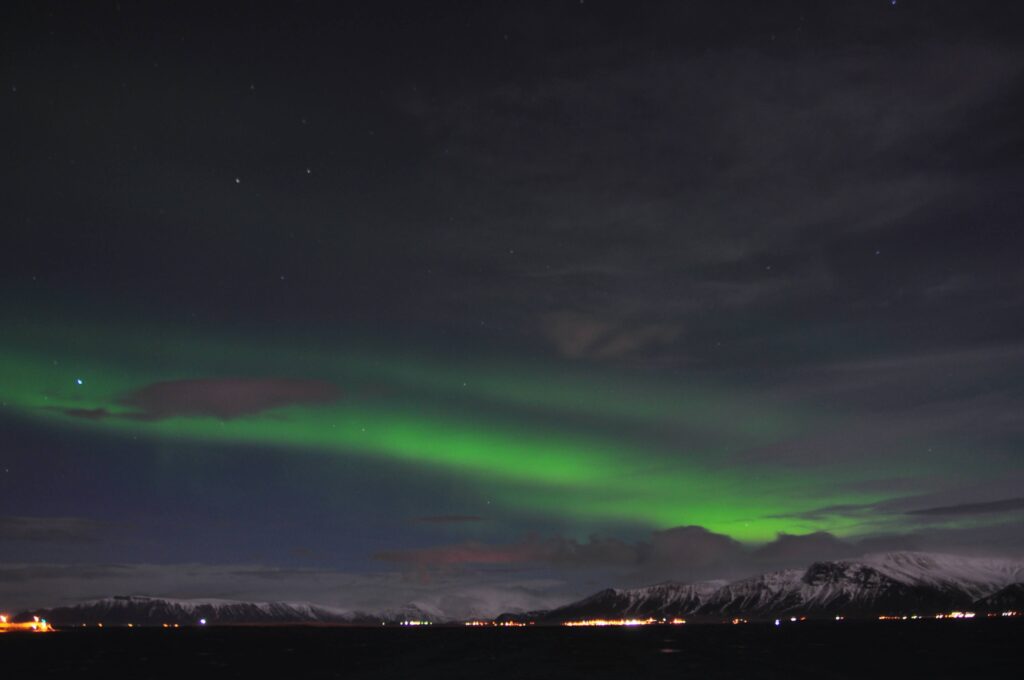
However, its important to mention that seeing the Northern Lights depends on two things:
- which days they come
- and secondly, how cloudy it is.
If its cloudy, then it will be hard to see them.
The Northern Lights tend to visit in cycles, sometimes lasting for a few nights at a time before disappearing for 4-5 days and then returning. For this reason, to have the best chance to see the Northern Lights, then its best to spend at least a week in Iceland. (And even then, keep in mind that it isn’t guaranteed.)
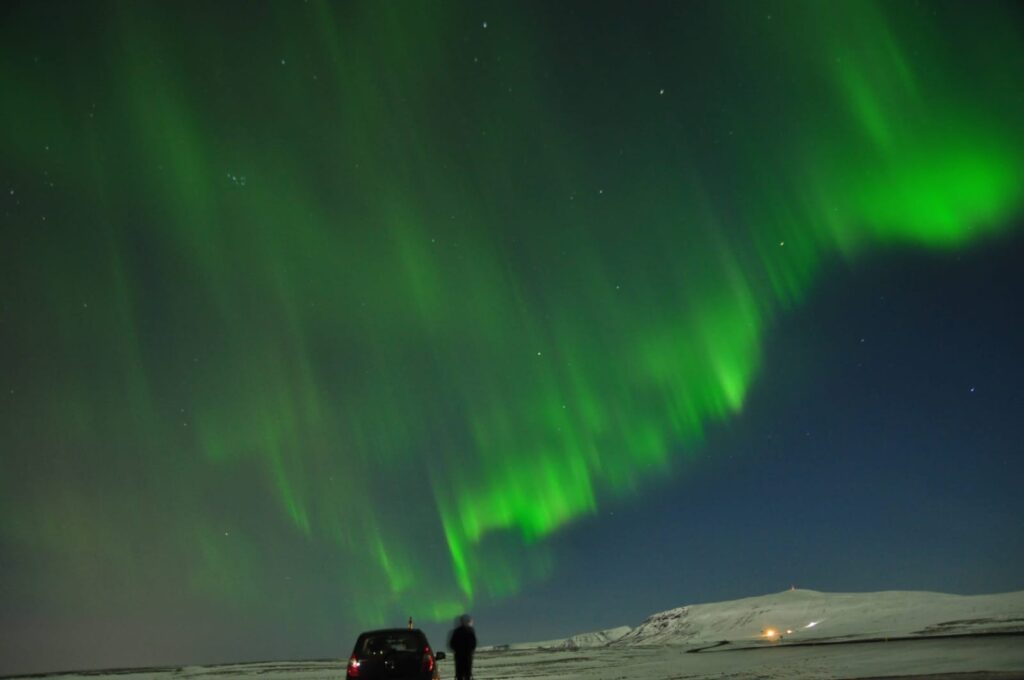
We were very lucky to see the Northern Lights on our trip to February in Iceland. Personally, I believe at least a week in Iceland is needed to see and experience the other attractions anyway.
You can either:
- Chase the Northern Lights on your own. Be sure to check the online Aurora forcast to know when to look. Also, go to areas with lower light pollution (Reykjavik would not be the place)
- Join a Northern Lights tours that usually includes transportation to an area with low light pollution, and sometimes – hot chocolate.
This Northern Lights Tour from Reykjavik (4 hours, $200 per person) includes transportation, cinnamon buns, pick up from your hotel, professional photography. Plus, you can rebook for free if you don’t see them!
2. Visit waterfalls
Iceland is full of waterfalls – over 10,000 of them. They don’t have an exact count of waterfalls, because there are simply too many of them to count!
In February, some of Iceland’s waterfalls are partially frozen, but some are flowing as usual.
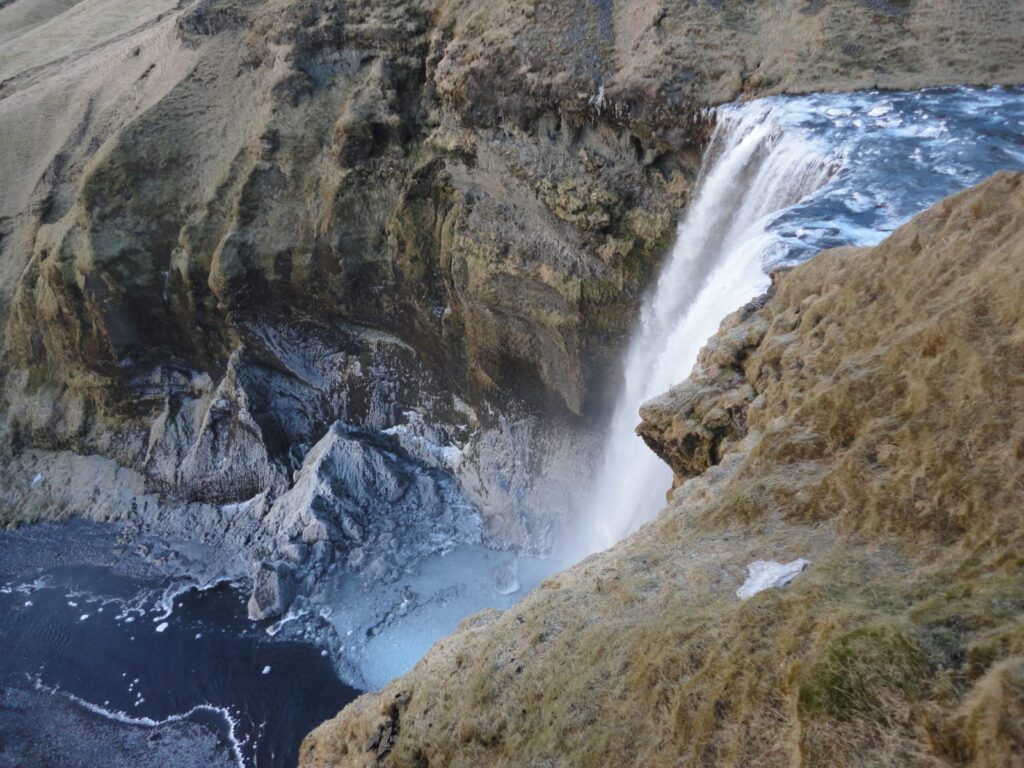

You’ll be spoiled with waterfalls in Iceland. Some of them are located close to the road or parking lot and are fairly easy to get to. Others require a bit of trekking.
The key waterfalls in Iceland to visit are:
- Gulfoss waterfall in the Golden Circle. Known for being mostly frozen in the wintertime (which is cool to see.)
- Seljandfoss and Skogafoss (pictured above),both standing 195 feet tall, and are completely free of charge, and located near eachother
If you’re driving in Iceland, you can see these waterfalls on a road trip of the Ring road 1.
If you’re not renting a car – then there is a tour you can take that will show you both waterfalls, as well as other interesting things along the South Iceland coastline.
Book your South Iceland tour of Skogafoss and Seljandfoss here ($150 per person, 10+ hours)
3. Spend a couple days in Reykjavik
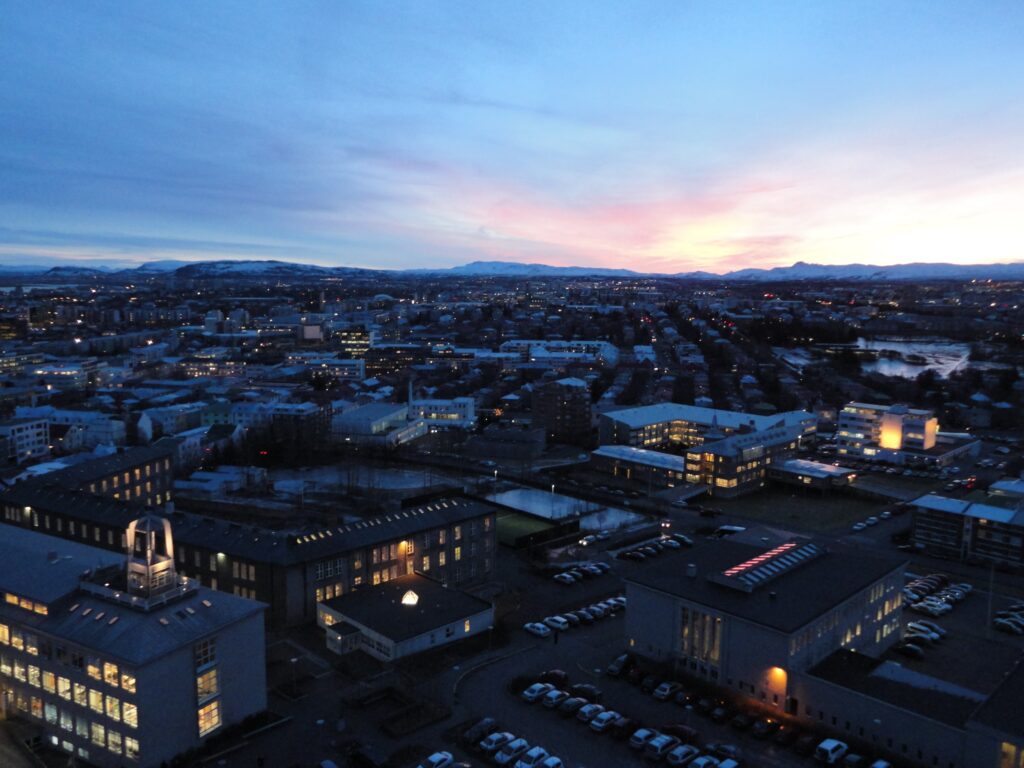
Reykjavik is the largest city in Iceland, of about 140,000 people. It makes for a good home base while exploring Iceland.
you can either:
- Stay in one place in Reykjavik and just to tours around the country
- Use Reykjavik simply as a stop on your Iceland itinerary and dedicate a few days to exploring it
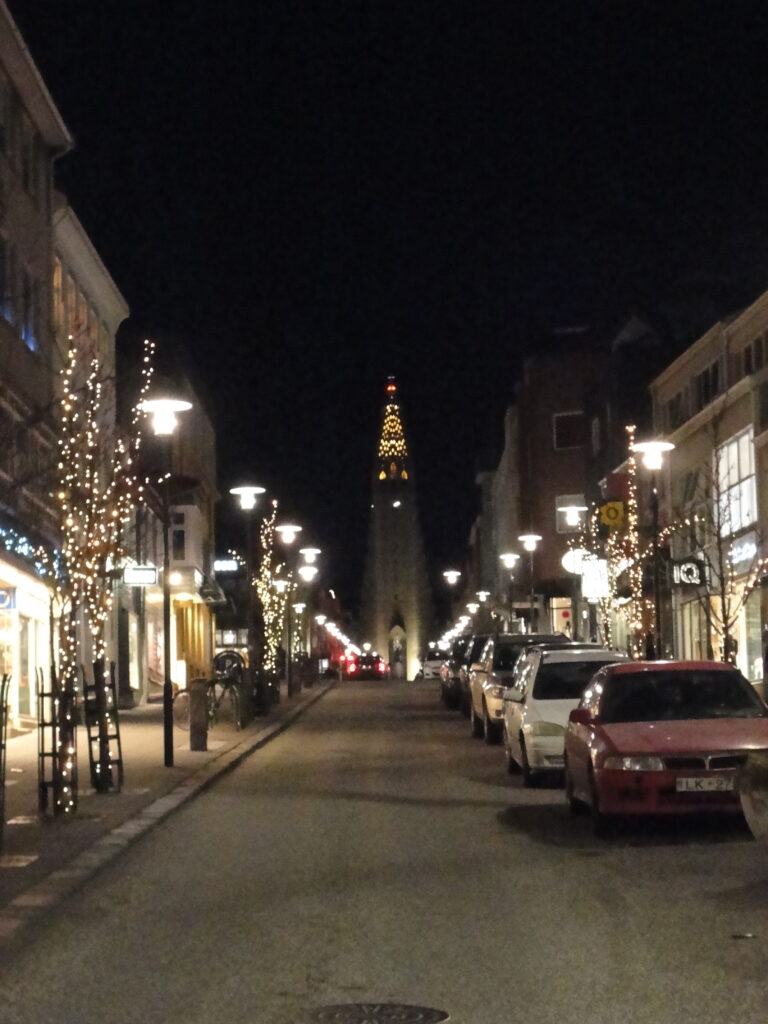
I would recommend at least a day or two exploring Reykjavik, depending on how many of the things you’re interested in seeing.
There are some great museums, and a charming Old Town, and even some parks and a walkway along the harbour.
Things to check out in Reykjavik during February:
- The Old Town of Reykjavik. It was first settled in the year 874, by the Vikings so as you can imagine – it has a lot of fascinating history. There are restaurants, cafés, some historical landmarks, and its a good place to shop for Icelandic souvenirs.
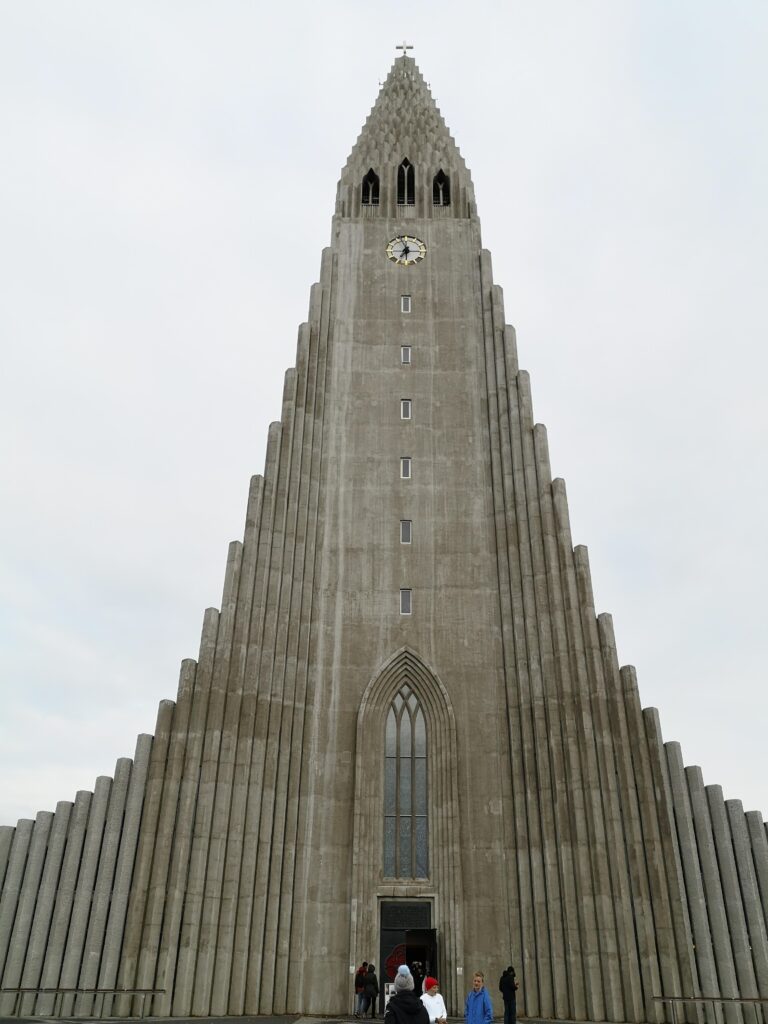
- The Hallgrimskirkja, 244-ft tall Lutheran church – one of the tallest buildings in the country. You can climb to the top and get a view of the city and the surrounding lands.
- Whale Museum – see life size whales and learn about these majestic creatures. 15 minute walk from downtown Reykjavik. Get tickets here.($35 per person)
- Perlan: Wonders of Iceland – highly recommended as adults or with kids, and give yourself 2-4 hours to see everything; the Aurora Borealis show, and the man-made ice cave in the lower level. Grab your tickets for the full experience here ($60 per person)
- Viking Exhibition – learn about the Viking settlements in the 800s and how Iceland gradually turned into what it is today. Skip the line tickets available here.

4. Soak in a thermal bath
Iceland’s number of active volcanoes means dozens of naturally occurring hot springs heated by the geothermal energy.
Soaking in an outdoor natural hot spring is especially nice in winter. You can feel the crisp weather while your body is warmed by the heated water.
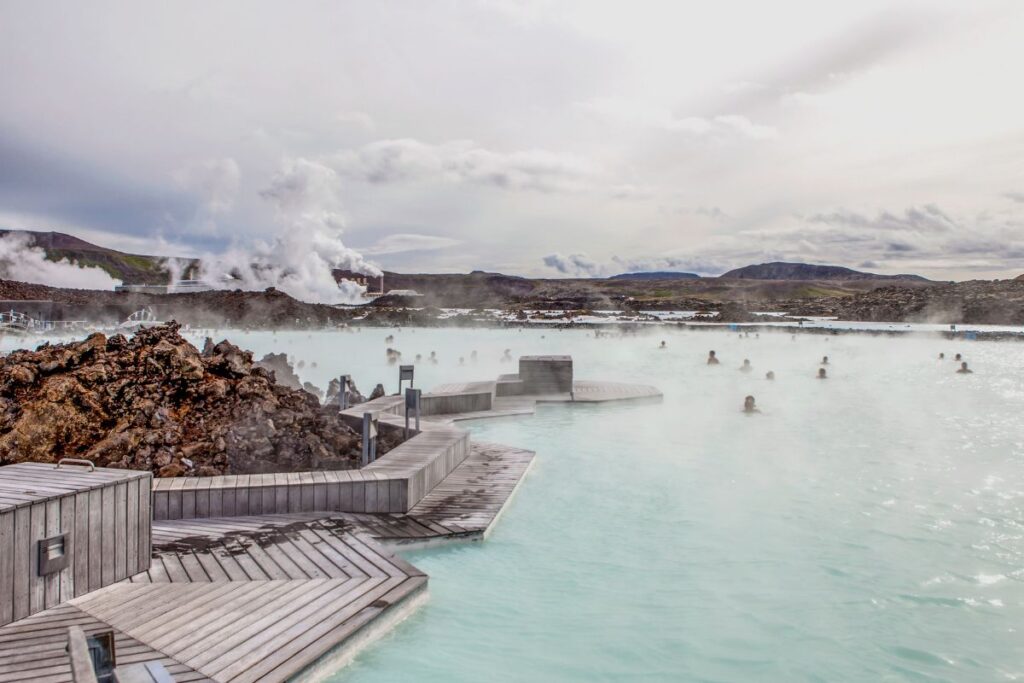
Most of the geothermal baths in Iceland are also attached to saunas, and steam rooms.
We went to the Blue Lagoon. It’s the most famous geotheramal bath in Iceland and its right near the airport. So, its especially perfect if you time it so that you go right before, or after your flight.
However, there are other thermal baths to visit in Iceland. Here are a couple that are also near Reykjavik:
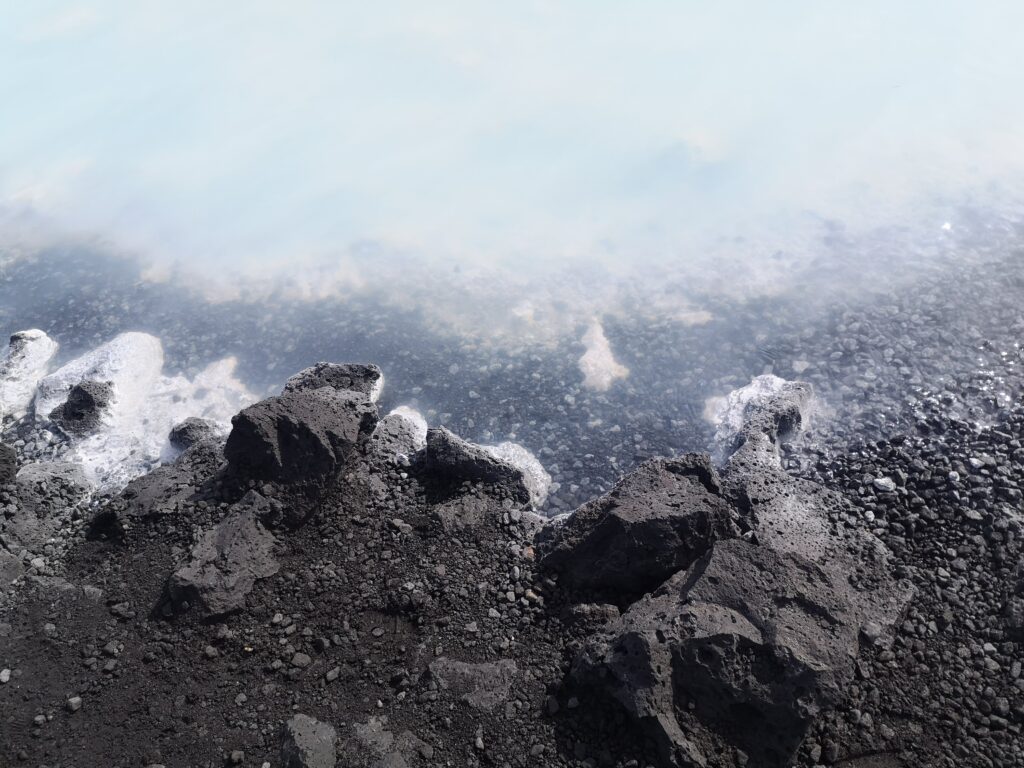
- Sky Lagoon – just 20 minutes from Reykjavik and newly opened in 2021. Very popular with locals and tourists. It is man-made, but naturally heated. Open 11am on weekdays in the winter, and 10am on weekends and closes at 10pm. Grab your ticket here ($100 per person)
- Secret Lagoon – 90 minute drive from Reykjavik. Open from 10am to 7pm in the winter. Also man-made but its naturally heated with local hot springs. 38-40 C year round. Grab your entrance ticket here.($30 per person – much cheaper, but also a further drive.)
5. Tour the Golden Circle
The Golden Circle is one of the best places to visit in Iceland. Its a sightseeing trail that covers 300 km (186 miles) of rugged, natural and dramatic terrain.
Its located in southeast Iceland, just outside of Reykjavik and it includes craters, waterfalls, seaside cliffs, and the famous geysir.
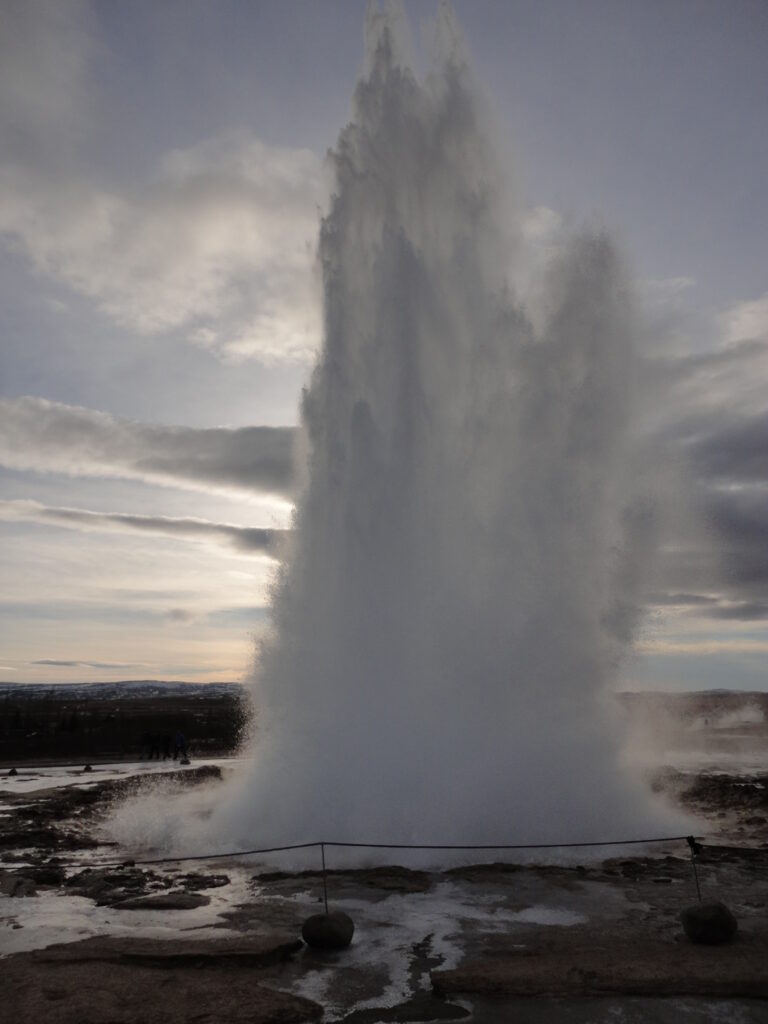
Also along the Golden Circle are breathtaking sights in Thingvellir National Park, which is the only place in the world where you can stand between two continental plates!
It takes about 4 hours to drive around the Golden Circle, but that doesn’t include any breaks or stops. The sights on the Golden Circle can be seen in a day, but you should budget at least 6-7 hours to factor in driving, stops and lunch breaks.

No car? You can also tour the highlights of the Golden Circle on a day trip from Reykjavik.
Book your day tour of the Golden Circle here ($100 per person, 8 hour tour)
6. Explore an Ice Cave
There are more ice caves in Iceland than in any other country (for once, Iceland lives up to its name!)
Ice caves change every year, because they are formed by the melting and changing shape of glaciers. So every year will be unique regardless of which ice cave you visit.
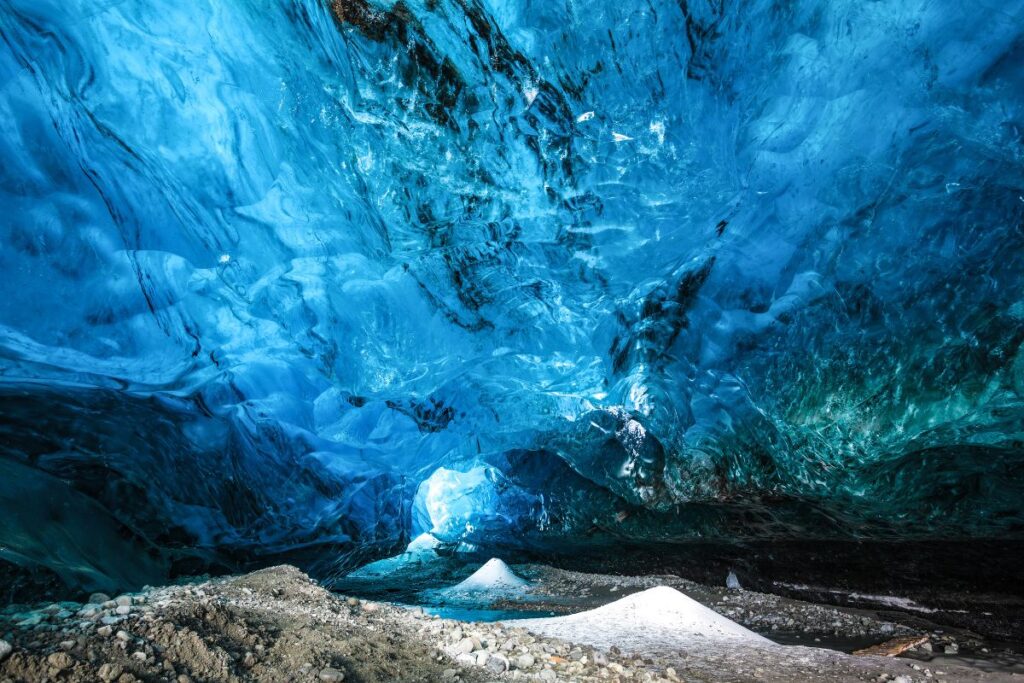
In order go inside an ice cave, you will need to join a tour. Visiting an ice cave can’t be done without a guide because of the expert knowledge and equipment that is needed to do it safely. You will also need to wear crampons on your feet, a helmet, and of course -dress warmly!
Depending on where you’re staying in Iceland, there are various tours offered throughout the country for different Ice Caves.
Here are some of the most popular ice caves in Iceland:
- Katla Ice Cave, located in Vik. A day trip from Reykjavik – book here ($300 per person, more expensive than the ones below but the ratings are better. It includes transportation from Reykjavik)
- Vatnajokull Ice Cave – This is the one we did! Europe’s largest glacier, located in central Iceland. Book here (3 hours long, $200 per person)
- Crystal Ice Cave – near Glacier Lagoon – Book here ($200 per person, 3 hours)
- Langjokull Ice Cave, known for being the largest ice tunnel in the world! It’s only about 1 hour from Reykjavik. Book your tour online here.
7. Winter Lights Festival
In February, Winter Lights Festival (Vetrarhátíð in Icelandic) takes place in Rekjavik. You can see beautiful, multicoloured lights, as well as take part in some fun and free activities.
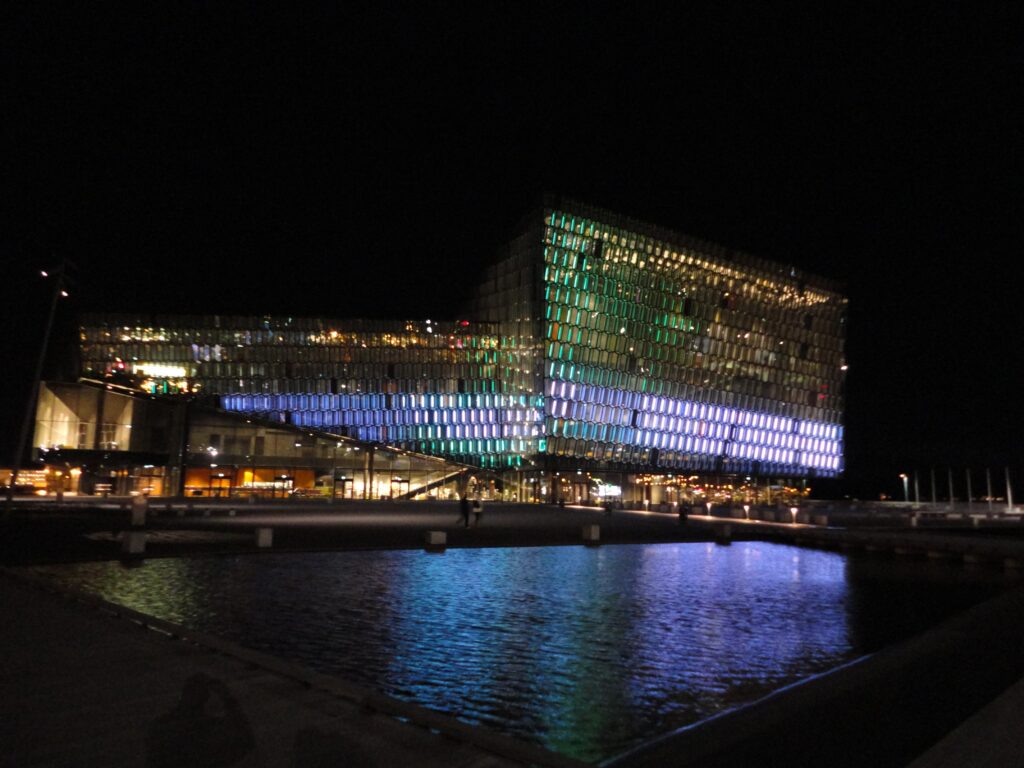
The Winter Lights Festival includes events like Museum Night, Swimming Pool Night (where swimming pools offer free swimming.)
The most exciting aspect of the Winter Nights Festival is the Trail of Lights, which means the streets are decorated with colourful lit up street art. The trail starts from the Hallgrímskirkja down Skólavörðustíg and on to Austurvell, which is decorated with light art.
You can walk the trail between 6:30–10 pm every evening of the Winter Lights Festival.
The Winter Lights Festival is usually held in early February, and the exact dates for 2026 will be the 2nd to the 6th of Februay. More informationcan be found here.
8. Tour a real lava cave
A lava cave is what it sounds like – a cave formed by flowing lava. Did you know that Iceland has 30 tunnels flowing through lava caves, most of which were formed thousands of years ago?
One of the best lava tunnels in Iceland is conveniently located right outside Reykjavik, and known as “Raufarhólshellir.” Its one of the longest and most well-known lava tunnels in Iceland, and is open year-round.
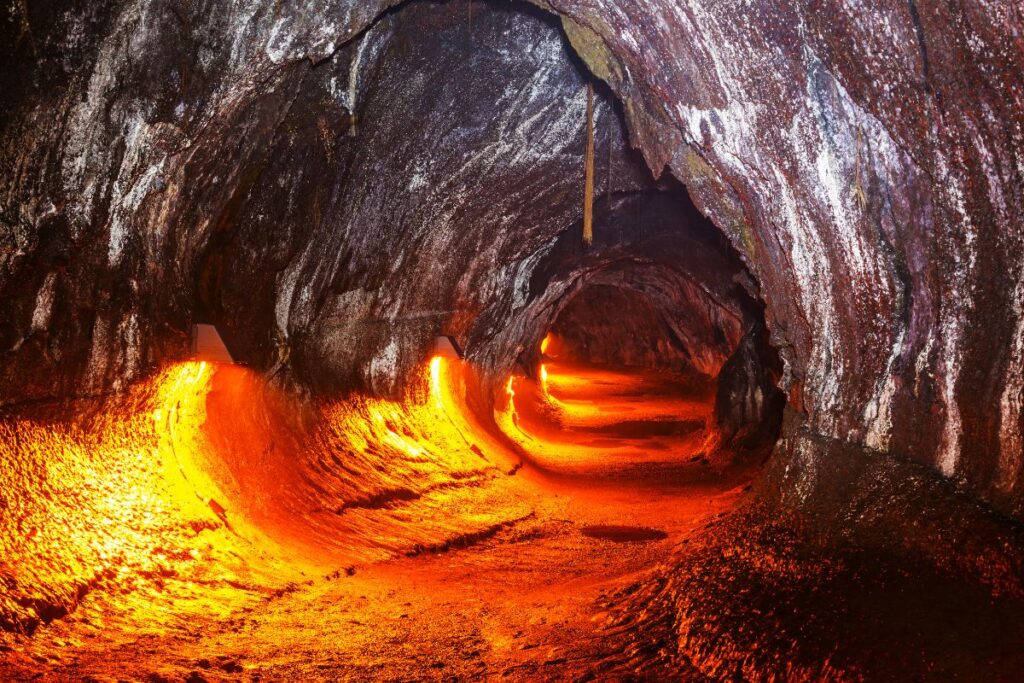
Lava caves are only accessible with a guided tour, as you need to wear the correct equipment and know how to move around safely. Tours include the headlamp with the flashlight so you can see where you’re going!
Tours of the Raufarhólshellir lava tunnel are 1-hour long, and you’re given time at the end to explore on your own and take some pictures.
Tip: It will be even colder in the lava tunnel than it is outside, so wear your warmest clothes – I would recommend a hat and scarf, and don’t forget gloves!
Book your lava cave tour outside Reykjavik here ($70 per person)
9. Go whale watching
Iceland is considered to be the whale-watching capital of Europe, with 20 different species of whales living in the Atlantic waters off the coastline.
While the wintertime is not the peak season for whale watching in Iceland, so your chances aren’t the highest for seeing them – you could still try if its important to you.
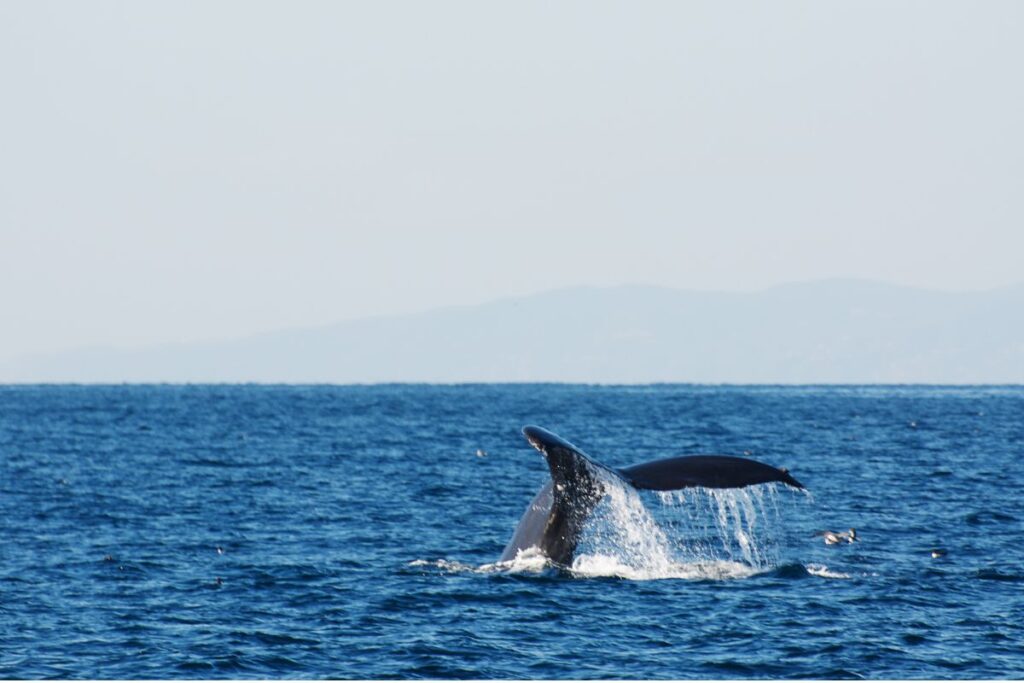
While the whale-watching capital of Iceland, Husavik, is closed for whale tours in the winter months – you can still go whale watching in Reykjavik. The tours run, even thorugh the winter.
Book your whale watching tour from Reykjavik here
10. Do a roadtrip of Ring 1 (Route 1)
Ring Road (also known as Route 1) is the highway that runs along the coast of Southern Iceland, and does almost a circle of the country. If you’re doing any tours to Black Sands Beach or Glacier Lagoon, then you’ll be driving on the Route 1.
The Route 1 is not only straight forward and well maintained, but there are also so many scenic places to stop at. Some people do the full Ring Road (a full circle of Iceland) while others simply do half of it, which includes only south Iceland.
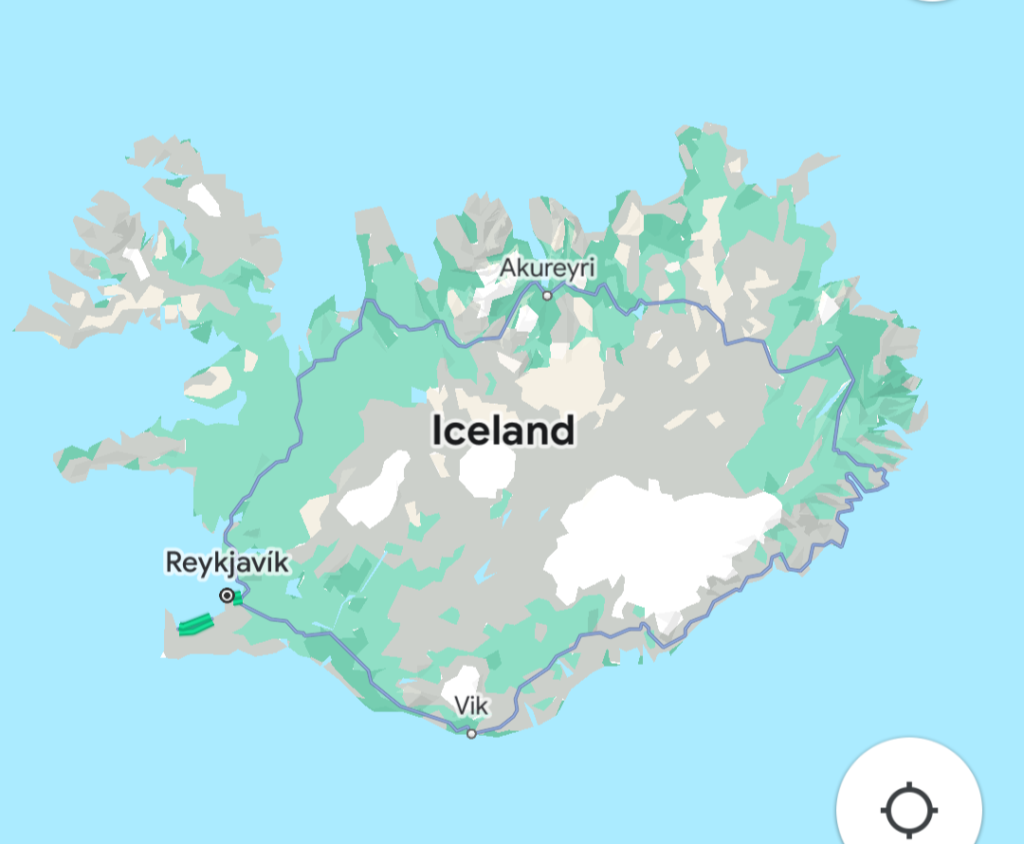
Another option is to drive up north from Reykjavik (western Iceland) -there are a lot of gems to see there too.
The entire Ring Road covers 1,287 km (800 miles.) Driving the whole thing totals up to about 24 hours of driving. Realistically, if you want to do the full circle, then you should give yourself at least a week to do all of it, maybe an extra day or two in winter.
Some people choose to do only half of the Ring Road, driving from Reykjavik to Glacier Lagoon and back, which can be done easily in 2-3 days if you want to stop and see everything along the way.
Bearing potentially unpredictable winter conditions in mind, it would be good to give yourself a day or two extra from these estimates, to account for snowstorms or the possibility of needing to drive slower or cut some drives short due to icy weather.
Tip: While you’re in Iceland, keep up with the weather forecast by checking their site in English here.
11. Spend a day (or two) in Vik
Vik is located along Ring Road 1, about 2 hours and 45 minutes from Reykjavik. Vik is close to glaciers, waterfalls, and is home to the famous Black Sands Beach, so its absolutely worth a stop on your itinerary.
Near Vik, you can do a tour of the Mýrdalsjökull Glacier nearby, and visit the famous columns on the shore of Black Sands Beach.
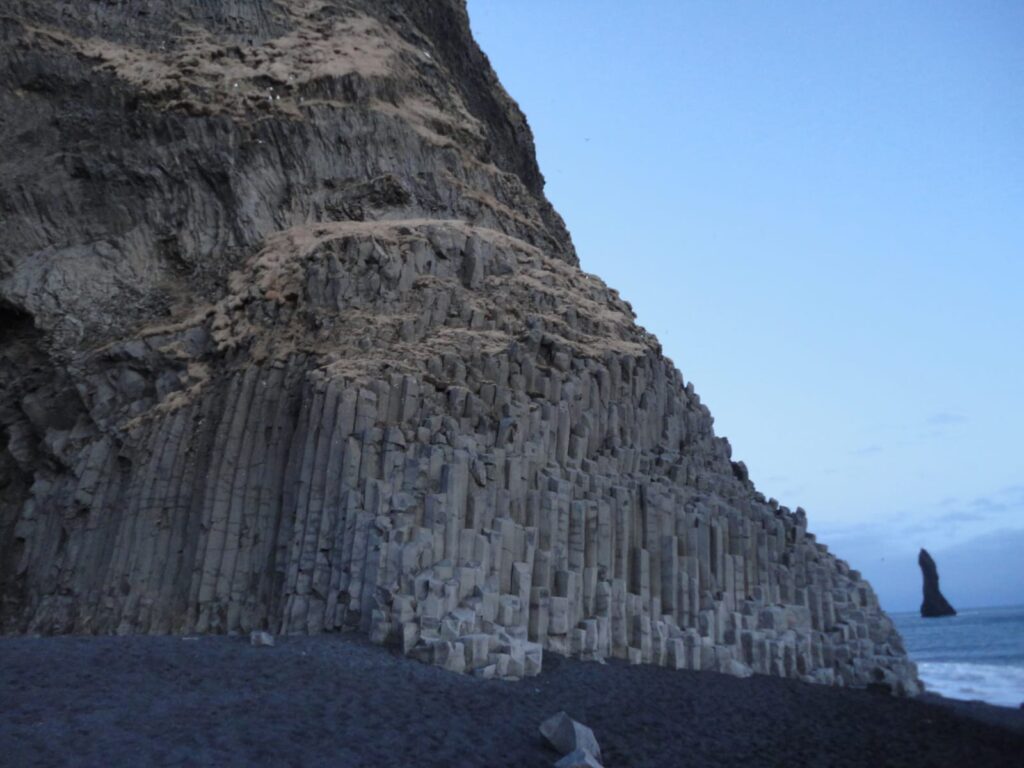

In addition, Vik is a short drive to three waterfalls: 45 minute drive to Seljandsfoss, and only 30 minutes to Skogafoss and Kvernufoss, which are both beautiful and popular waterfalls.
For this reason, Vik can make a good home base while exploring Southern Iceland, since there’s so much in the area. Read my post for more things to do in and around Vik.
If you want to stay overnight in Vik, Hotel Kría is 10 minutes from the village and offers stunning landscape views.
12. Glacier Lagoon and Breiðamerkursandur (Diamond Beach)
Jökulsárlón Glacier Lagoon and Diamond Beach are the kind of sights that people come to Iceland for. Both in summer and especially winter, they offer stunning scenery of snow, glacier and ice that most of us are not used to seeing at home.
Conveniently, both Glacier Lagoon and Diamond Beach are located very close to each other, just across the road. The Diamond Beach gets its ice (the “diamonds”) from Glacier Lagoon. You can walk from the shore of the Glacier Lagoon to the Diamond Beach in only 2 minutes!
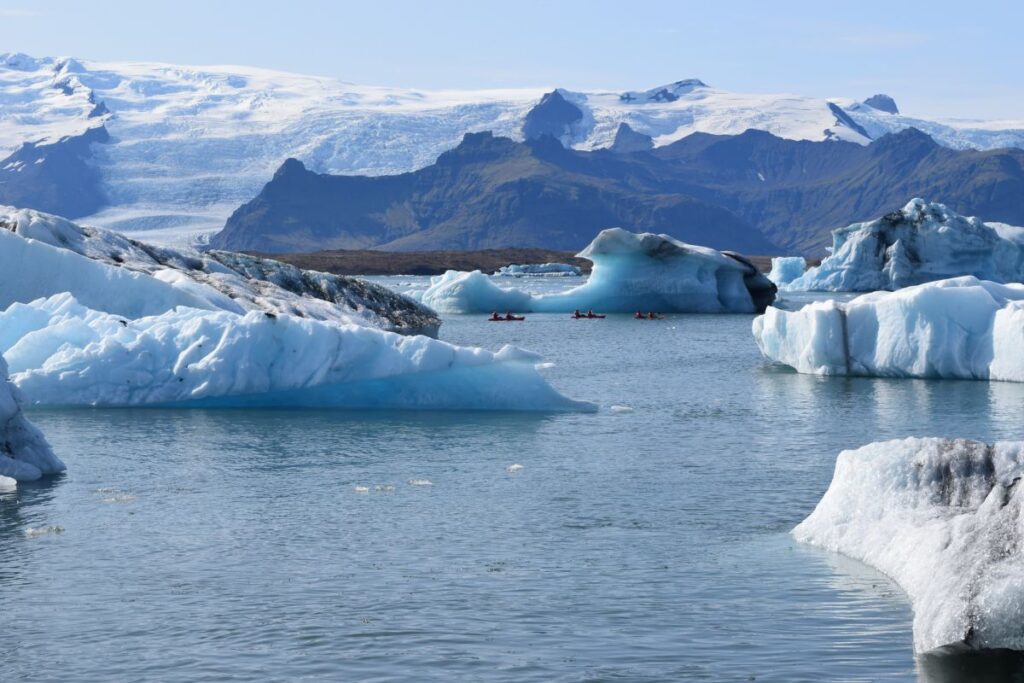

Driving from Reykjavik to Glacier Lagoon takes just under 5 hours by car (10 hours round trip) and you need about 2-3 hours there to make the visit worthwhile.
If you’re not driving, consider booking a tour from Reykjavik to this incredible place.
Book your 1-day tour of Glacier Lagoon and Diamond Beach from Reykjavik here
13. Spend a day in Husavik
Husavik is the oldest settlement in Iceland. It was first settled by a Swedish Viking named Garðar Svavarsson who stayed there for one winter around 870 A.D , and built the first house on Icelands territory.
Today, Husavik is a small town of just over 2,000 people (although that number goes up dramatically in the summer months with all the tourists.)
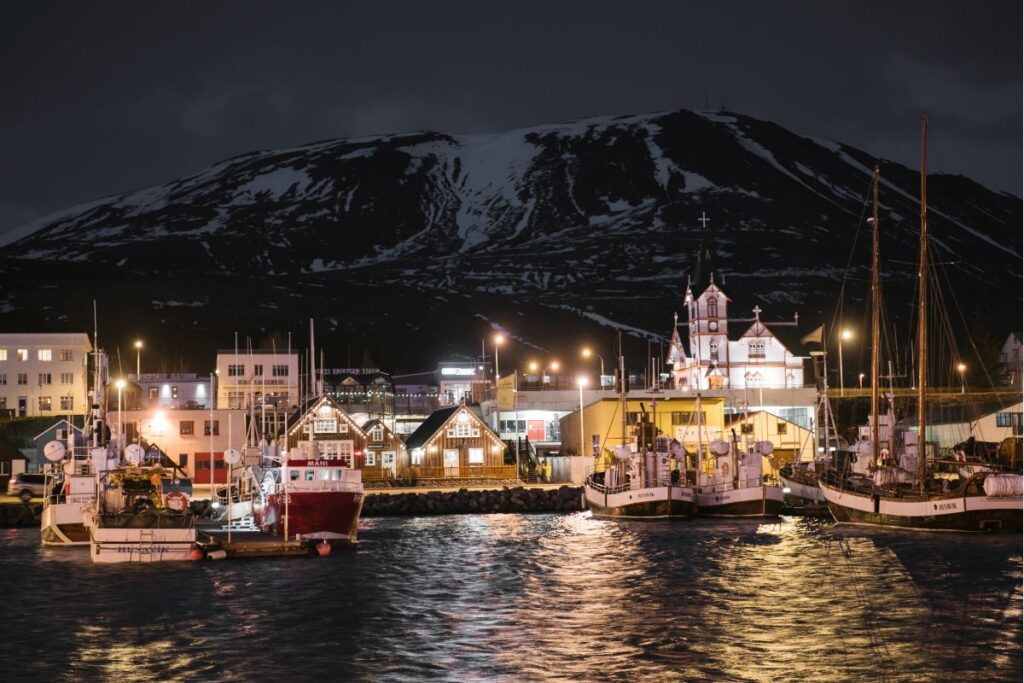
Located in northeast Iceland, Husavik is just a slight detour if you’re doing the full Ring Road tour of Iceland, or you could drive there from Reykjavik in about 6 hours (give or take with winter driving.)
Husavik is also known as the whaling capital of Iceland, which is the reason why most travel there. Unfortunately, the whale tours don’t run during the wintertime – only spring through autumn.
However, Husavik is still worth a visit, even in winter. For one, the Geosea Thermal Sea Baths are located there, as well as a fantastic Whale Museum, and the Euro Vision Museum.
The best way to get around Husavik is on foot; the town is small, but charming and of colourful houses and artwork. One of the most iconic landmarks in Husavik is the wooden church, called Húsavíkurkirkja, built in 1907.
Book your Husavik walking tour here
What to Wear in Iceland in February
A lot of Iceland’s attractions and things to see are based around the outdoors. In order to enjoy it to its fullest, be prepared for the chilly weather, by bringing the following:
- A warm coat
- Hat, mitts and scarf
- Warm gloves
- Waterproof footwear. Hiking boots, if they’re waterproof are suitable, even if you’re not doing hiking perse; the ground is still icy and wet and extra traction is worth it. I’d recommend this pair for men, or this one for women
- Neck-warmers like these ones that help shield your face from the cold winds
- Long-sleeved shirts, or a hoodie
- A swimsuit (in case you want to warm up by soaking in a geothermal bath!)
Pro Tip: It’s a good idea to wear layers during Iceland in February so that you can always remove clothing if you’re warmer than you thought you’d be, or add clothing if you’re cold.
Iceland in February FAQs
Here are the most commonly asked questions about visiting Iceland in February
How cold is it in Iceland during February?
The average daily low in Iceland throughout February is -2°C (28.4°F.) Generally, it will hover around 0°C (32°F.) So, although its chilly, its not as cold as some other Northern hemisphere countries in the wintertime, such as Canada.
Can you go in the Blue Lagoon in Iceland in February?
You can absolutely visit the Blue Lagoon in Iceland in February. The Blue Lagoon is open year-round and its an enjoyable experience being able to soak in the steamy waters in the crisp air.
Is February or March better to visit Iceland?
There are more daylight hours in March (10 – 13.5 hours of daylight) vs only 7-10 hours of daylight in February. In addition, its also warmer. However, March is a more popular time to visit Iceland because of the spring breakers from North America. So, although its colder in February, you can see the country with much fewer tourists.
Is Iceland expensive in February?
The prices in Iceland will be a little cheaper in February, as its low-season. Everything from hotels, tours and accommodations will have a cheaper rate for the reason that there are much fewer tourists at that time. Its perfect for people who want to enjoy the sights with fewer tourists, and save some money!
Iceland in February Conclusion
By now you have a good idea of things to do in Iceland in February. The pros of visiting Iceland in February include seeing the country with fewer other tourists, seeing the winter terrain, and the possibility to see the Northern Lights.
The scenery in Iceland is absolutely spectacular in the wintertime, so bring your cameras and phones to be ready to take a LOT of pictures.
A final reminder to dress for the weather, and pay attention to the weather conditions, especially if you’re driving anywhere. While Icelandic winters are mild compared to many areas in North America, its best to be prepared.